
Introduction
Cardboard usually refers to a paper product with a certain thickness and hardness. It can be made of single or multiple layers of pulp, has high bending strength and plane rigidity, and is suitable for making packaging boxes, display boards, paper containers, etc. Corrugated paper is a paperboard with a corrugated structure, which is composed of one or more layers of corrugated paper core and one or more layers of kraft paper or other paperboard. It has good cushioning, shockproof and moisture-proof properties, and is mainly used to make corrugated boxes, box liners and other packaging materials.
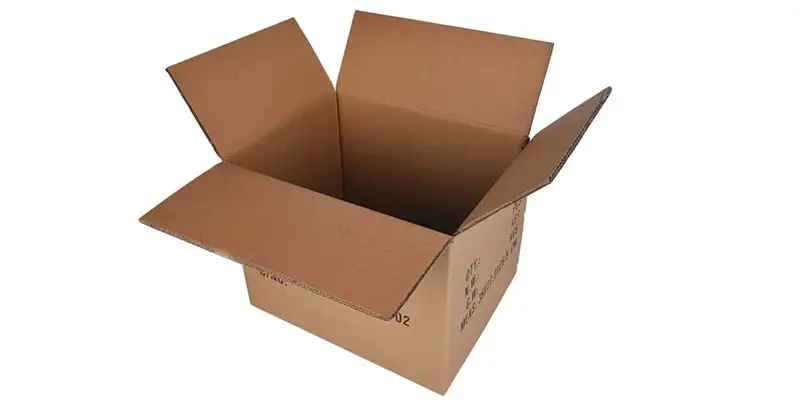
Transitional Paragraph
Now that we’ve established the basic differences, let’s dive deeper into the specific characteristics, advantages, and uses of corrugated and cardboard materials.
What is Cardboard?
Corrugated cardboard, commonly known as “corrugated paper” and “corrugated core paper”. Corrugated cardboard is anisotropic and many of its properties are highly directional. For example, the crushing degree of the edge, bending stiffness, tensile strength and surface properties will vary depending on the direction of the groove and the machine direction of manufacture.
Due to supply chain and scale considerations, paper is produced in separate plants called paper mills. Most corrugated paper mills keep paper reel stocks. In a classic corrugator, the paper is softened by high-pressure steam. Here, the newly formed corrugated cardboard is heated from the bottom by a hot plate. At the top, a load system applies various pressures to the belt. In order to meet the different packaging performance requirements of various products on the market, the three-layer cardboard, five-layer cardboard, and seven-layer cardboard that we are familiar with are derived by combining different flutes.
What is Corrugated Material?
Corrugated paper is one of the important materials for producing corrugated board. It requires good fiber bonding strength, smooth surface, good tightness and stiffness, and a certain degree of elasticity to ensure that the finished carton has shockproof and pressure resistance.
How is Corrugated Different from Regular Cardboard?
The main differences between corrugated cardboard and ordinary cardboard are shape, use and characteristics:
- Shape: Corrugated cardboard is cardboard with corrugations, which are mechanically pressed out, while ordinary cardboard does not have this corrugated shape.
- Use: Corrugated cardboard is mainly used to make cartons or boxes, providing compression resistance and shock absorption functions, and is suitable for packaging electrical appliances, food and other items. Ordinary cardboard has a wider range of uses and can be used to make cartons, writing paper, copy paper, etc.
- Characteristics: Corrugated cardboard has the characteristics of large volume, small size, light weight, high strength, and good cushioning performance. The characteristics of ordinary cardboard vary depending on its specific type. For example, some may be more suitable for printing, while others may be more suitable for packaging lightweight or non-fragile items.
Why is Corrugated Cardboard Stronger Than Regular Cardboard?
The structure of corrugated cardboard gives it higher bending resistance and mechanical strength. The interlayer in the middle of the corrugated cardboard is made into a W shape or other corrugated shapes. This shape changes the thickness of the paper and increases the bending resistance, thus becoming harder.
In addition, the corrugated corrugations of the corrugated cardboard are arranged in a row like an arched door, supporting each other to form a triangular structure. This structure can also withstand a certain amount of pressure on the plane and has good elasticity and buffering effect.
Common Uses for Cardboard vs. Corrugated Packaging
Corrugated boxes have a wide range of uses. As a packaging material, corrugated cardboard is low-cost, light-weight, and has a certain strength and stiffness. The appearance of corrugated boxes is neat and beautiful, and can be printed with various product patterns and exquisite decorative advertisements. It can be produced by highly mechanized automatic lines, and waste cardboard can be recycled.
Therefore, in packaging materials, corrugated cardboard has gradually replaced wood boards; corrugated boxes have gradually replaced wooden boxes. Packaging with corrugated boxes can also save precious packaging materials such as metal and wood. Especially in the current situation where wood resources are generally insufficient in the world, it is of special significance.
There are many products packaged in corrugated boxes. There are canned foods, soft drinks or wine, food, meat, clothing and textiles, medicines, tobacco products, detergents, instruments, small hardware, electrical products, rubber products and countless other small commodities. In addition, corrugated boxes can be used as packaging and transportation containers for fragile products such as glassware, porcelain, enamelware, instruments, and relatively heavy goods such as furniture, washing machines, televisions, refrigerators, bicycles, sewing machine heads and sewing machine panels, motorcycles, and extra-large sponge mattresses.
In recent years, corrugated boxes are also used to dry-load difficult-to-transport goods, such as fragile fresh eggs, live fish fry with water, flowers, fresh vegetables, fruits, and fresh fish. It can be seen that the use of corrugated boxes as packaging and loading materials is very wide.
Is Corrugated Cardboard Recyclable?
Yes, Corrugated cardboard is made of wood fiber, which can be decomposed by nature, which is a great contribution to the treatment of packaging waste. In the absence of government regulation, the economic efficiency of each material determines the degree of its recycling, and corrugated cardboard is no exception.
Based on the economic efficiency of corrugated cardboard itself and its strong recyclability, in theory, waste corrugated cardboard can be 100% recycled.
Summary
The difference in construction makes corrugated a better choice for more durable and impact-resistant packaging. Cardboard is thinner and used for lighter, everyday packaging, while corrugated is stronger and suitable for protecting more delicate or heavier items. Now that you understand the difference, you can make better choices when choosing the right packaging material. If you have any questions or need help choosing the right type of material, feel free to contact us!